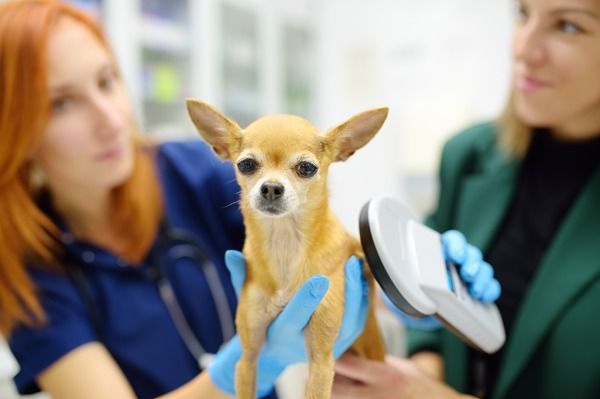
August 15 is National Check the Chip Day, a reminder to make sure your pet is microchipped—and that the information connected to the chip is current. A microchip is tiny, but it can make a big difference if your pet ever becomes lost.
What is a microchip?
A pet microchip is a tiny radio frequency identification (RFID) device, about the size of a grain of rice, implanted under the skin. It contains a unique identification number that can be read by a scanner. It has no battery and does not actively transmit information, so it does not work like a GPS tracker.
Does my pet need a microchip if they wear an ID tag?
Yes. Ideally, pets should have both. Collars can fall off or be removed, and tags can become worn and unreadable. A microchip provides a more permanent form of identification.
What about an indoor cat?
Indoor cats can escape through an open door or window. Because they are unfamiliar with the outdoors, they may become frightened and can hide or have difficulty finding their way home.
Microchipping can significantly improve the chance of reunion.
How is a microchip implanted?
The chip is injected under the skin, usually between the shoulder blades. Implantation is quick and takes about as long as a routine injection. Anesthesia is generally not necessary.
Can my pet lose their microchip?
A microchip cannot fall off like a collar, but it can occasionally move from its original location. When veterinary or shelter staff check a pet, they may scan the entire body to find a chip that has migrated.
Ask your veterinary team to scan your pet periodically to confirm the chip can still be detected.
My pet is microchipped. Is that enough?
No. The chip needs to be registered—and the registration needs to stay current.
Your pet’s microchip number must be connected to your contact information in a registry. If you move or change your phone number or other contact information, update the registry. Otherwise, someone may find your lost pet and scan the chip but still be unable to reach you.
If you adopted an already-microchipped pet, make sure the registration has been transferred to your current information.
How does a microchip help my pet get home?
When a lost pet is brought to a veterinary hospital or animal shelter, staff can scan for a microchip. The scanner displays the chip’s identification number, which is used to find the registered owner’s contact information.
That’s why having a chip, registering it, and keeping your information current all matter.
Can my pet’s microchip do anything else?
Yes. Some electronic pet doors recognize microchips and open only for authorized pets. Some models can control when a pet has access or track when the pet enters and exits.
Microchips can also be used with access-controlled feeding areas, which may be helpful when pets in the same household require different diets.
Microchipping may also be required for international travel, depending on the destination.
What should I do on Check the Chip Day?
On August 15:
- Not microchipped? Talk with your veterinarian about getting one.
- Already microchipped? Have the chip scanned periodically to make sure it can be detected.
- Check the registration. Make sure your phone number and other contact information are correct.
- Update changes promptly. Don’t wait until your pet goes missing.
- Keep an ID tag on your pet, too. A microchip is an important backup, not a replacement for visible identification.
Is your pet’s chip ready?
This Check the Chip Day, don’t stop at asking, “Is my pet microchipped?”
Ask the questions that really matter: Can the chip still be found? Is it registered? And if someone scans it today, can they find me?
A registered, up-to-date microchip could be the key to bringing your beloved pet home.
LifeLearn News
Note: This article, written by LifeLearn Animal Health (LifeLearn Inc.) is licensed to this practice for the personal use of our clients. Any copying, printing or further distribution is prohibited without the express written permission of Lifelearn. Please note that the news information presented here is NOT a substitute for a proper consultation and/or clinical examination of your pet by a veterinarian.
Archives
No archives to show.
Categories