Why the Recall Cue Might Be the Most Important Word Your Dog Ever Learns
There’s a moment every dog owner dreads. The leash slips. The gate wasn’t latched. Your dog is suddenly free, and the world is full of cars, squirrels, and bad ideas. In that moment, one behavior matters more than any other: recall.
In dog training terms, “recall” simply means your dog comes to you when called. But simply doesn’t mean easily. A reliable recall is built, not wished for, and when it’s done right, it can quite literally keep your dog alive.
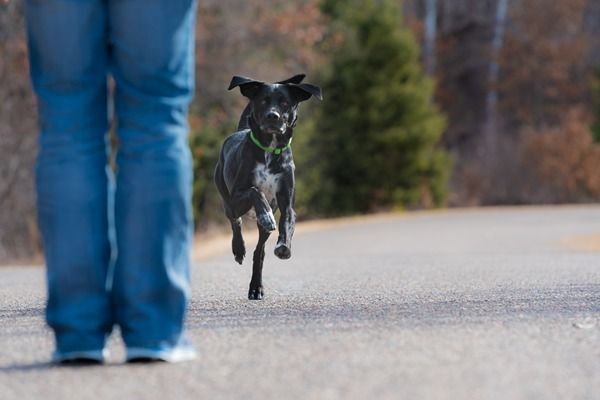
A trained recall gives your dog a clear cue—often a word like “come” or “here”—that tells her exactly what behavior will earn a reward. When the cue is solid, your dog doesn’t hesitate. She runs back to you because experience has taught her that good things happen when she does.
Start Early. Start Small. Make It Fun.
Recall training should begin the day you bring your dog home.
The earliest lessons don’t even use a cue. Instead, they teach a simple idea: being close to you is wonderful. Walk around the house or yard with a treat or toy tucked away. When your dog naturally moves toward you, reward her. No words needed yet. You’re building value in being close to you.
Once she’s happily rushing to you for rewards, you can layer in the cue. Say it once, cheerfully, right as she starts moving toward you. Timing and tone matter—it should feel like an invitation, not a command.
Reinforcement Is Non-Negotiable
Every recall should pay off. Give your dog treats, play, praise—something your dog genuinely enjoys. And just as important: never call your dog to scold her. If she comes when called, whatever she was doing before no longer matters. Punishment after a recall teaches one lesson only—that coming to you is risky.
The same goes for calling your dog away from fun and immediately ending the interaction. If “come” always predicts being locked inside and left alone, she’ll stop responding. Spend a few enjoyable minutes with her first so the cue stays positive.
Build Real-World Reliability
Practice daily. Ten times a day isn’t excessive—it’s ideal. Start close, then slowly add distance and mild distractions. Use a long line if you’re training in an unsecured area, but only as backup – don’t pull your dog to you when you call her. If she struggles, don’t push harder. Make it easier again. Reliable recalls take weeks or months, and that’s normal.
One final detail often overlooked: teach your dog to be comfortable with you touching her collar after she comes. If she ever slips away, you may need to secure her quickly. Pair collar touches with treats so that moment feels safe and familiar, not scary.
A perfect recall doesn’t exist. Leashes and fences are still important. But a well-trained recall dramatically improves the odds that your dog comes back to you—before curiosity turns into danger. And that makes it one of the most valuable skills you’ll ever teach. And don’t think it’s always easy—work with your veterinary team or a positive-based dog trainer if you and your dog need help mastering the recall.
LifeLearn News
Note: This article, written by LifeLearn Animal Health (LifeLearn Inc.) is licensed to this practice for the personal use of our clients. Any copying, printing or further distribution is prohibited without the express written permission of Lifelearn. Please note that the news information presented here is NOT a substitute for a proper consultation and/or clinical examination of your pet by a veterinarian.
Archives
No archives to show.
Categories